Intoeing in Children: Causes, Signs, and Treatment
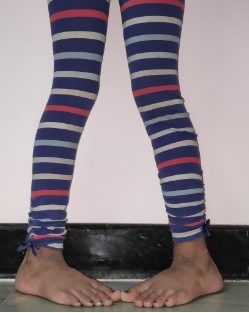
Intoeing occurs when a child's feet turn inward while walking or running instead of pointing straight ahead. Commonly known as being pigeon-toed, parents often notice this condition when a baby starts to walk. While intoeing frequently causes parental concern, most cases resolve naturally as children grow.
What Causes Intoeing in Children?
Three main conditions cause intoeing, depending on whether the inward turning originates in the foot, shinbone, or thighbone.
1. Metatarsus Adductus (Foot Turning Inward)
In metatarsus adductus, the outer edge of the foot curves inward, giving it a distinct "C" shape.
- Outcome: About 90% of cases resolve naturally within the first 4 to 6 months of life.
- Treatment: Babies aged 6 to 9 months with severe or rigid deformities may require special shoes or serial casting. Surgery is extremely rare.
2. Internal Tibial Torsion (Shinbone Turning Inward)
Internal tibial torsion occurs when the tibia (shinbone) twists inward.
- Outcome: This is a normal finding in newborns and typically corrects itself by the time the child reaches walking age.
- When to seek help: Persistent internal tibial torsion after 3 years of age requires further evaluation by a pediatric specialist. Special shoes, splints, or exercises do not effectively correct this condition.
3. Excessive Femoral Anteversion (Thighbone Turning Inward)
Excessive femoral anteversion is the most common cause of intoeing in toddlers and older children.
- Signs: The thighbone (femur) twists inward, causing both kneecaps (patellae) and toes to point inward. It becomes most noticeable around 5 or 6 years of age.
- Behaviors: Children with femoral anteversion frequently sit in a "W" position with their knees together and feet flared out.
Treatment & Management Options
Disability from intoeing is extremely rare, and most conditions correct spontaneously as your child's skeleton matures. Special shoes, braces, and corrective exercises are generally ineffective.
At-Home Guidance
- Discourage "W" Sitting: Encourage your child to sit cross-legged or straight-legged instead.
- Promote Active Play: Encourage physical activities like cycling and swimming to support normal physical development.
Surgical Options
Surgery is rarely necessary and is reserved for severe cases in children older than 8 years. Indications for surgery include frequent tripping, severe mobility restriction, or an unsightly gait. The procedure, called a corrective derotation osteotomy of the femur, realigns the thighbone.
Conclusion
Intoeing is a common developmental phase that usually resolves on its own without long-term issues. If your child exhibits severe intoeing, frequent tripping, or persistent symptoms past age 3, consult a pediatric orthopaedic specialist for a thorough evaluation.