
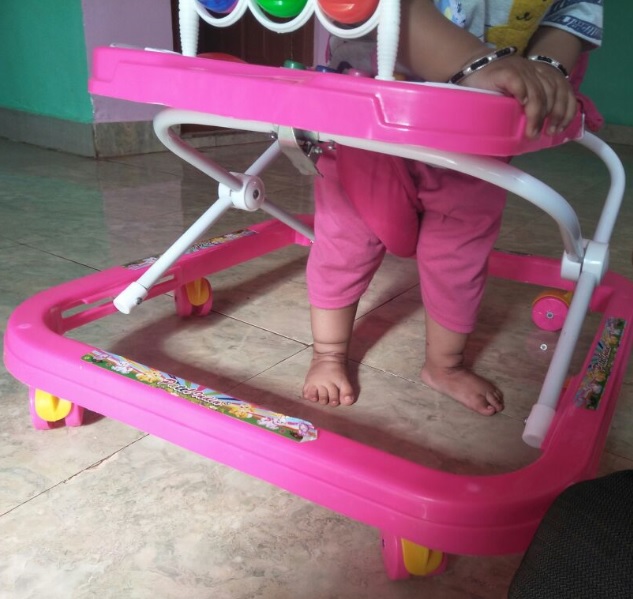
Baby Walker – A Boon or a Bane ?
A baby walker consists of a wheeled base supporting a rigid frame, a fabric seat, and a plastic tray. Parents often use these devices for infants between 5 and 15 months of age to support mobility while feet touch the floor. However, medical experts urge caution when considering a baby walker for your child.
Why Parents Use a Baby Walker
Caregivers often choose a baby walker for several common reasons:
- Entertainment: Keeping the infant occupied and entertained.
- Mobility: Attempting to encourage movement and early walking.
- Convenience: Holding the infant during feeding or providing quick exercise.
- Perceived Safety: Operating under the mistaken belief that a walker keeps babies safe.
Common Baby Walker Injuries
Despite their popularity, mobile baby walkers pose severe safety risks. A baby walker allows a child to move faster than 3 feet per second, which makes adult supervision insufficient to prevent sudden accidents.
Frequent injuries include:
- Stair Falls: Tipping or rolling down stairs causes severe head injuries and fractures.
- Reaching Hazards: Increased height allows infants to reach hot liquids, electrical cords, and toxic household chemicals.
- Tipping Over: Walkers easily trip over uneven surfaces, doorway thresholds, or small floor rugs.
How a Baby Walker Delays Motor Development
A baby walker does not help infants learn to walk faster. In fact, these devices actively delay physical milestones.
Walkers create a false sense of independent movement, which reduces a child's natural motivation to crawl or pull themselves up. Additionally, a baby walker strengthens lower leg muscles incorrectly without developing the core balance and trunk stability required for natural walking.
AAP Guidance & Recommendations
Health organizations strongly advise against mobile infant walkers:
- Follow AAP Advice: The American Academy of Pediatrics (AAP) recommends a full ban on manufacturing and selling mobile baby walkers with wheels.
- Avoid Mobile Walkers: Do not use wheeled walkers at home, and advise babysitters, daycare centers, and grandparents to skip them.
- Choose Safer Alternatives: Use stationary activity centers without wheels, or opt for push toys once your child can pull themselves up to stand.
- Spread Parent Education: Share safety awareness with other caregivers regarding the risks of mobile walkers.
Conclusion
A mobile baby walker offers no developmental benefits and introduces major safety hazards. To support your child’s physical growth safely, skip the wheeled walker and focus on supervised floor play and stationary activity stations.